AI Training for Supply Chain Teams: Why Adoption, Decision Clarity, and Business Impact Depend on Capability Building
AI Training for Supply Chain Teams: Why Adoption, Decision Clarity, and Business Impact Depend on Capability Building
May 09, 2026
by: Corey Weekes
TL;DR
- AI investment does not create value until teams use it in real supply chain decisions.
- Many AI adoption efforts fail because training is generic, technical, or disconnected from daily workflows.
- Supply chain AI training must be role-specific, practical, and tied to business outcomes.
- Executives, supply chain leaders, planners, analysts, operators, finance teams, and IT teams need different levels of capability.
- Success should be measured by adoption, decision quality, productivity, service, cost, working capital impact, and confidence, not course completion.
- Universities and colleges also have a role to play by preparing students for practical AI-enabled supply chain work.
- The goal is not AI awareness. The goal is better supply chain decisions, stronger controls, and measurable business impact.
AI Investment Without Decision Adoption
AI has become a central part of supply chain transformation.
Organizations are investing in forecasting tools, digital twins, control towers, planning platforms, automation, and AI-enabled decision support. The promise is clear: faster decisions, better visibility, improved planning, lower cost, stronger inventory discipline, and better service.
But the results are uneven.
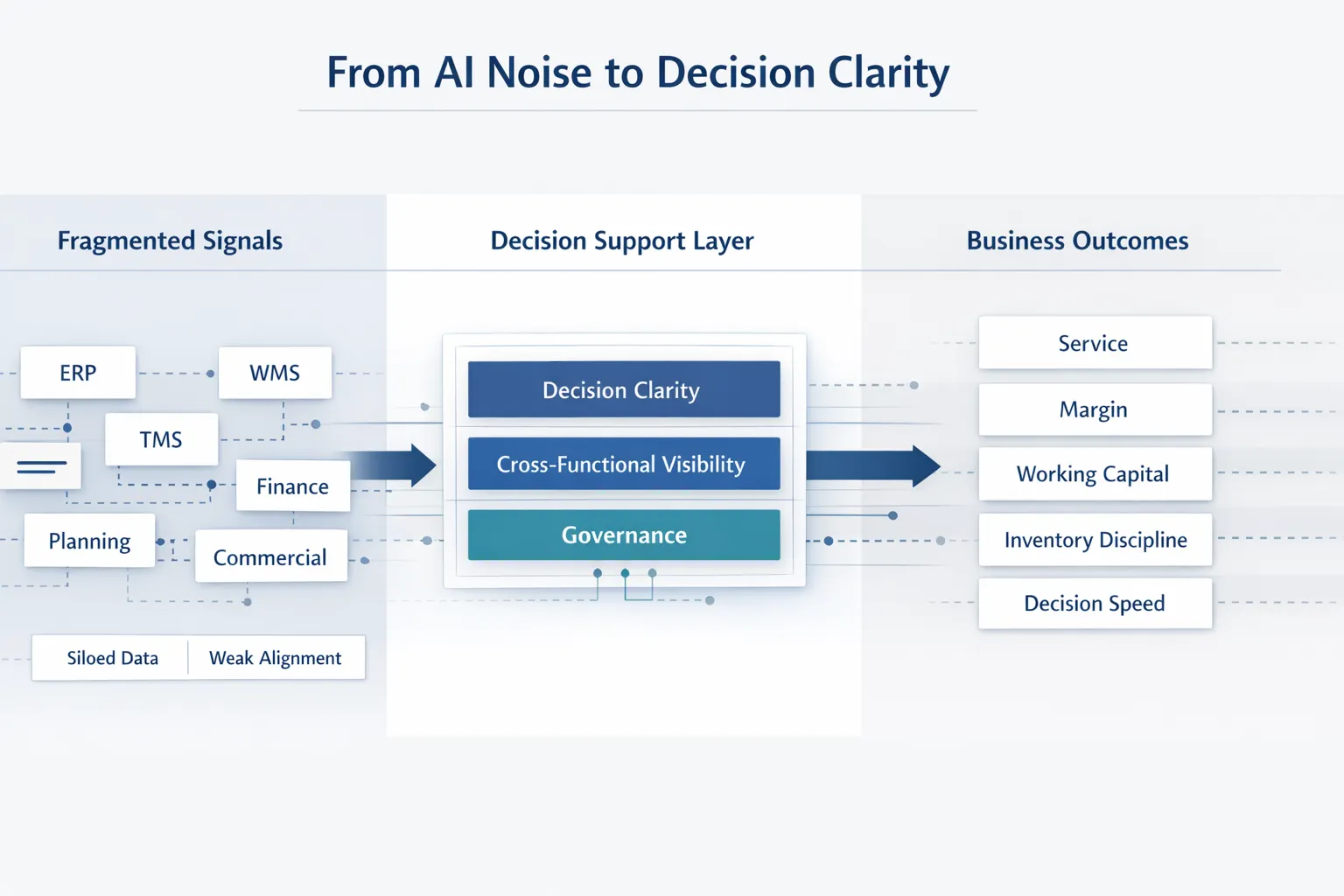
Many companies are buying or building AI capabilities faster than their teams can use them. Tools are implemented, but daily decisions do not change. Planners still export data to spreadsheets. Leaders still debate the same tradeoffs manually. Operators still work around systems they do not fully trust. Finance teams still struggle to connect AI initiatives to margin, working capital, and return on capital employed.
The issue is often framed as a technology problem.
In many cases, it is a capability problem.
AI for supply chain management only creates value when people know how to use it in the operating reality of the business. That means understanding what the AI is recommending, when to trust it, when to challenge it, how to govern it, and how to connect its outputs to service, cost, inventory, cash, and customer commitments.
This is why AI training for supply chain teams cannot be treated as a short awareness course or a system tutorial.
It must become structured capability building.
What Is AI Training for Supply Chain Teams?
AI training for supply chain teams is the practical development of skills, behaviors, and decision routines that help people use AI in real supply chain work.
It is not just training people on what artificial intelligence is.
It is not only teaching system features.
It is not a one-time session before go-live.
Effective AI training helps different roles understand how AI supports the decisions they are responsible for. It connects tools to workflows, workflows to decisions, and decisions to business outcomes.
For supply chain teams, this may include:
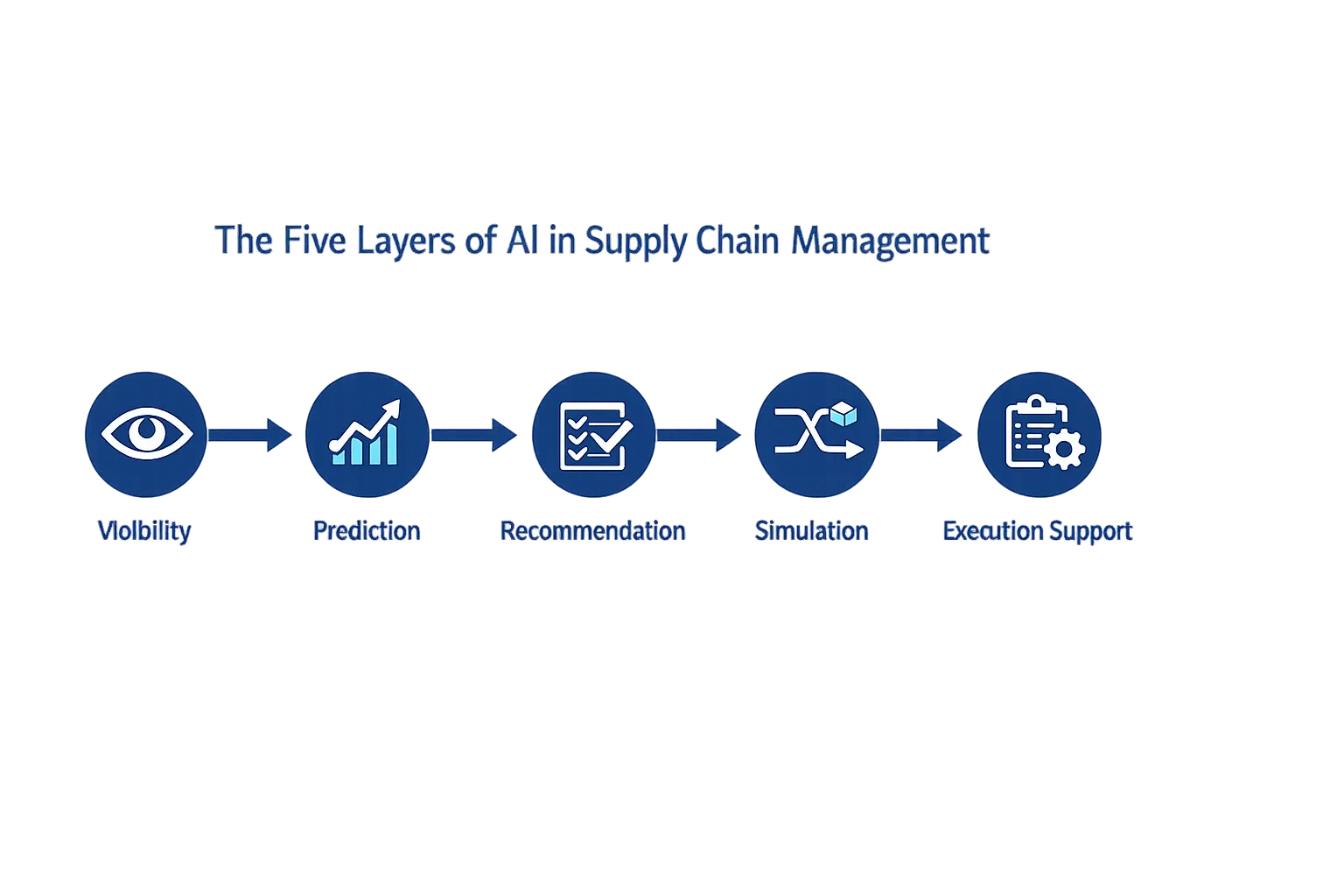
- using AI-generated demand signals to support forecast reviews
- interpreting replenishment recommendations
- understanding exception alerts
- evaluating inventory tradeoffs
- testing scenarios before making planning decisions
- managing human-in-the-loop approvals
- identifying when AI outputs are unreliable
- connecting operational actions to financial impact
The practical test is simple:
Can the team use AI to make better decisions in the real business environment?
If the answer is no, training has not gone far enough.
Why Most AI Training Programs Fail
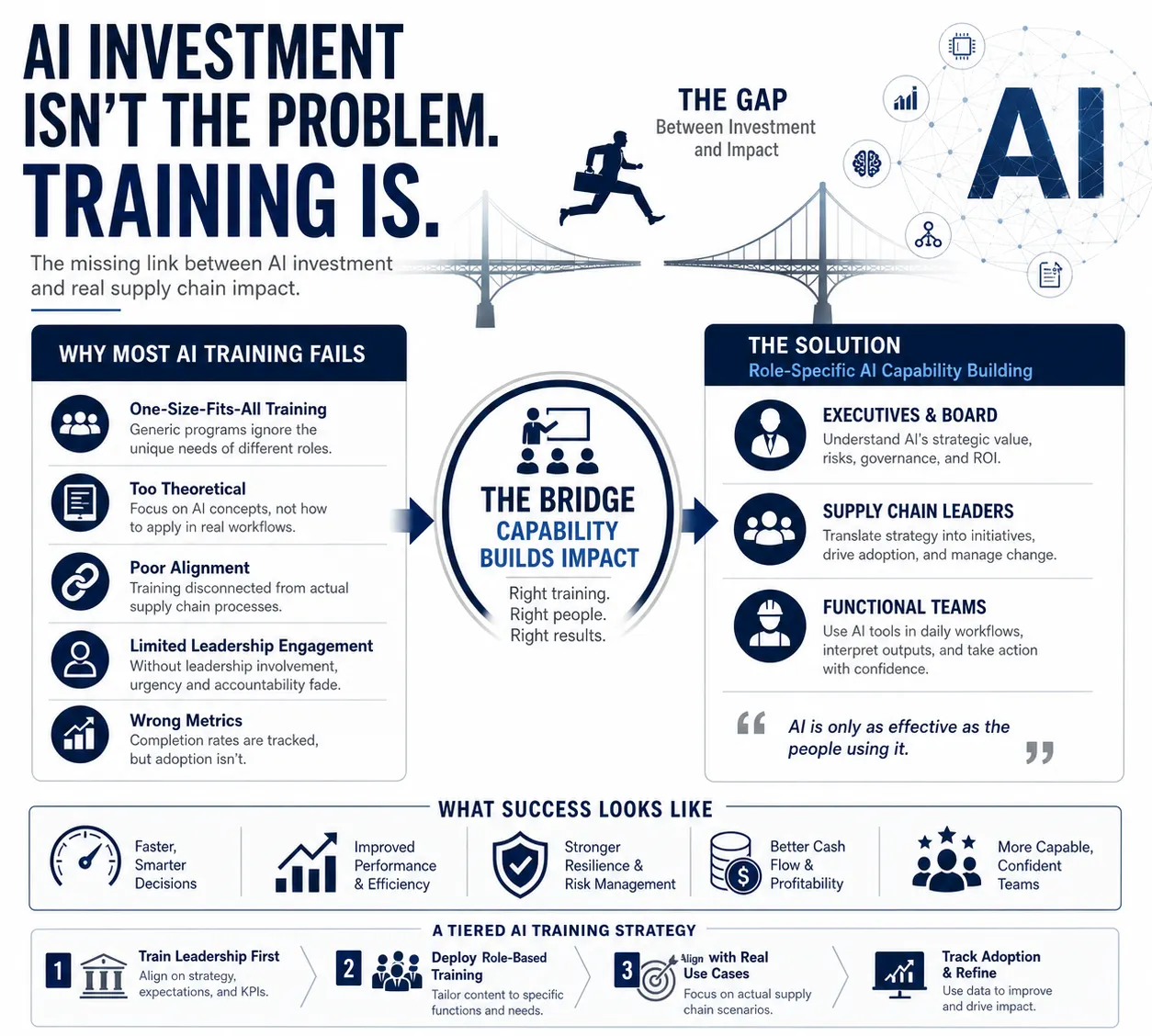
Many organizations recognize the need for AI training, but still fail to drive adoption. The problem is usually not lack of effort. It is poor design.
1. Training is too generic
A planner, a warehouse manager, a finance leader, and a chief supply chain officer do not need the same training.
Generic AI education may create awareness, but it rarely changes behavior. Supply chain adoption requires training that reflects the role, workflow, decision rights, and business context of each audience.
Executives need to understand risk, governance, investment logic, and business impact.
Planners need to understand how AI changes forecasting, replenishment, allocation, and exception management.
Operations teams need to know how AI recommendations affect labor, flow, capacity, and service commitments.
Finance teams need to understand how AI affects inventory, working capital, cost-to-serve, and margin.
IT and data teams need to support governance, integration, security, and system performance.
One-size-fits-all training does not build decision capability.
2. Training focuses too much on the technology
Many programs explain how AI works, but not how work changes.
Teams may learn about machine learning, generative AI, predictive models, or automation. That may be useful background, but it does not automatically help someone decide whether to adjust safety stock, rebalance inventory, expedite an order, approve a recommendation, or challenge a forecast.
Supply chain AI training must move from theory to operating use.
The question is not only, “How does the model work?”
The better question is, “How does this improve the decision?”
3. Training is disconnected from real workflows
AI adoption fails when training happens outside the reality of the business.
If a demand planner cannot connect AI outputs to the actual planning cycle, forecast review, promotion process, exception workflow, or inventory policy, adoption will be weak.
If a warehouse leader does not see how AI recommendations affect labor allocation, cutoffs, dock flow, or service, the tool remains abstract.
If finance cannot see how AI-supported decisions affect working capital, margin, or cost control, executive confidence drops.
Training must be built around real supply chain use cases.
Not generic examples.
Not abstract demos.
Real workflows. Real decisions. Real tradeoffs.
4. Leadership is not actively involved
AI adoption is a leadership issue before it is a training issue.
When executives treat training as a learning department activity, teams often treat it as optional. When leaders connect training to business priorities, adoption becomes part of the operating model.
Leadership must clarify:
- why AI matters to the business
- what decisions it is meant to improve
- where human judgment remains critical
- what outcomes will be measured
- how teams will be supported during the transition
Without this clarity, AI training becomes a checkbox.
5. Success is measured incorrectly
Many organizations still measure training success through completion rates.
Completion is easy to track. It is also a weak measure of impact.
A team can complete every module and still ignore AI recommendations, revert to spreadsheets, delay decisions, or apply old logic to new tools.
Better measures include:
- usage in daily workflows
- recommendation acceptance and override patterns
- improved decision speed
- reduced decision latency
- better forecast review quality
- improved inventory discipline
- fewer manual workarounds
- productivity gains
- user confidence
- measurable business impact
The goal is adoption and decision quality, not attendance.
The Real Requirement: Role-Specific AI Capability Building
AI training for supply chain teams should be structured by role and decision responsibility.
Different groups need different capabilities.
Board and C-suite: Strategic understanding and governance
Executives do not need to build models.
They do need to understand where AI can create business value and where it can create risk.
Their training should focus on:
- where AI supports supply chain decision quality
- how AI affects cost, service, inventory, cash, and ROCE
- how to evaluate AI business cases
- what governance and controls are required
- how to define adoption KPIs
- how to avoid funding disconnected pilots
- what decisions should remain human-in-the-loop
The executive role is to create direction, funding discipline, governance, and accountability.
Without that, AI adoption becomes fragmented.
Supply chain leaders: Translating strategy into execution
Supply chain leaders sit between strategy and daily operations.
Their training should help them translate AI capability into better operating decisions.
They need to understand:
- which decisions AI should support
- how to prioritize use cases
- how to manage resistance
- how to redesign workflows
- how to govern adoption across functions
- how to connect AI outputs to planning, inventory, fulfillment, and customer impact
This group is critical because AI adoption often breaks in the middle layer.
The strategy may be clear. The tool may be available. But unless leaders reshape the work, teams fall back into familiar patterns.
Planners and analysts: Interpreting outputs and improving decisions
Planners and analysts are often the practical adoption point.
Their training should focus on how to use AI outputs in planning decisions, not just how to navigate a platform.
They need to know:
- how AI-generated forecasts should be reviewed
- when recommendations should be accepted, adjusted, or rejected
- how to interpret confidence levels and exception signals
- how to test scenarios
- how to document overrides
- how to connect planning decisions to service, inventory, and cost
The most important capability is not blind trust.
It is informed judgment.
Operations teams: Acting on AI in the flow of work
Operations teams need training that connects AI recommendations to execution.
That may include:
- labor planning
- slotting
- inventory movement
- order prioritization
- capacity constraints
- exception handling
- transport decisions
- service recovery
If AI recommends an operational action, the team needs to understand what it means, why it matters, and how to respond.
Otherwise, recommendations are ignored or worked around.
Finance teams: Connecting AI to business impact
Finance should be involved early.
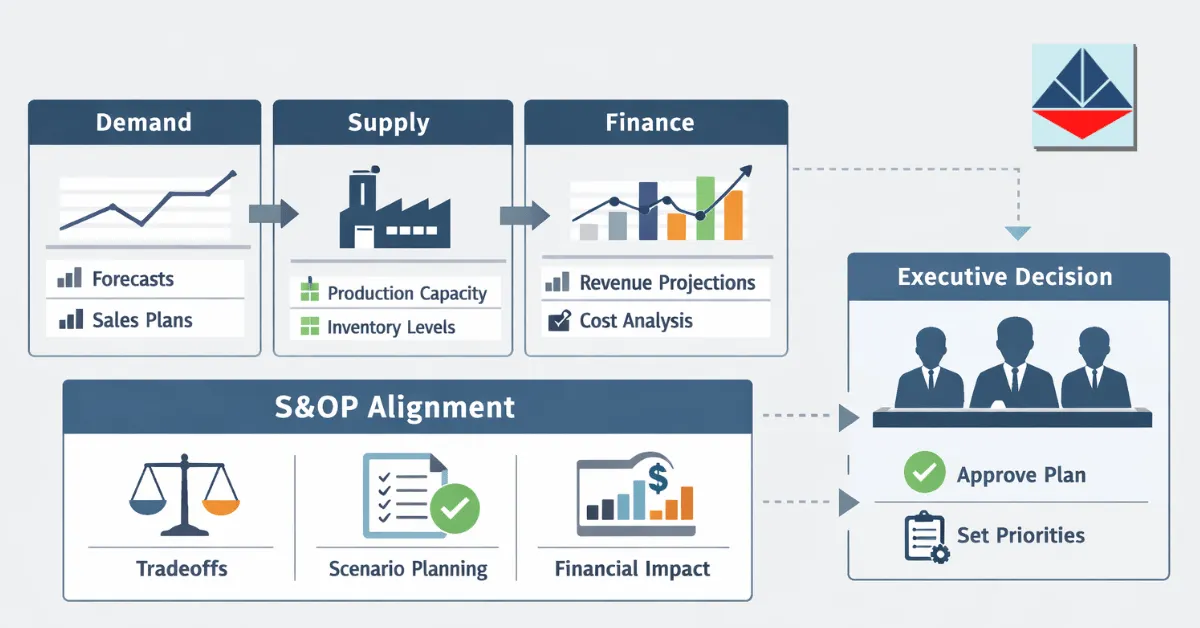
AI for supply chain management affects working capital, operating expense, margin, service cost, and investment decisions. Finance teams need to understand how AI-supported decisions translate into measurable value.
Their training should include:
- inventory and cash impact
- cost-to-serve implications
- scenario economics
- margin and service tradeoffs
- ROI and ROCE measurement
- value tracking after implementation
Finance involvement helps prevent AI from becoming a technology spend with unclear business return.
IT, data, and governance teams: Sustaining trust
AI adoption also depends on technical and governance capability.
IT and data teams need to support:
- data quality
- integrations
- security
- access controls
- model monitoring
- auditability
- workflow reliability
- issue resolution
- system performance
Trust is not created by a good demo.
It is created by reliable data, clear controls, and sustained performance after launch.
The University and Enterprise Gap
AI readiness is not only an enterprise issue.
Universities and colleges also play a role in preparing the next generation of supply chain professionals.
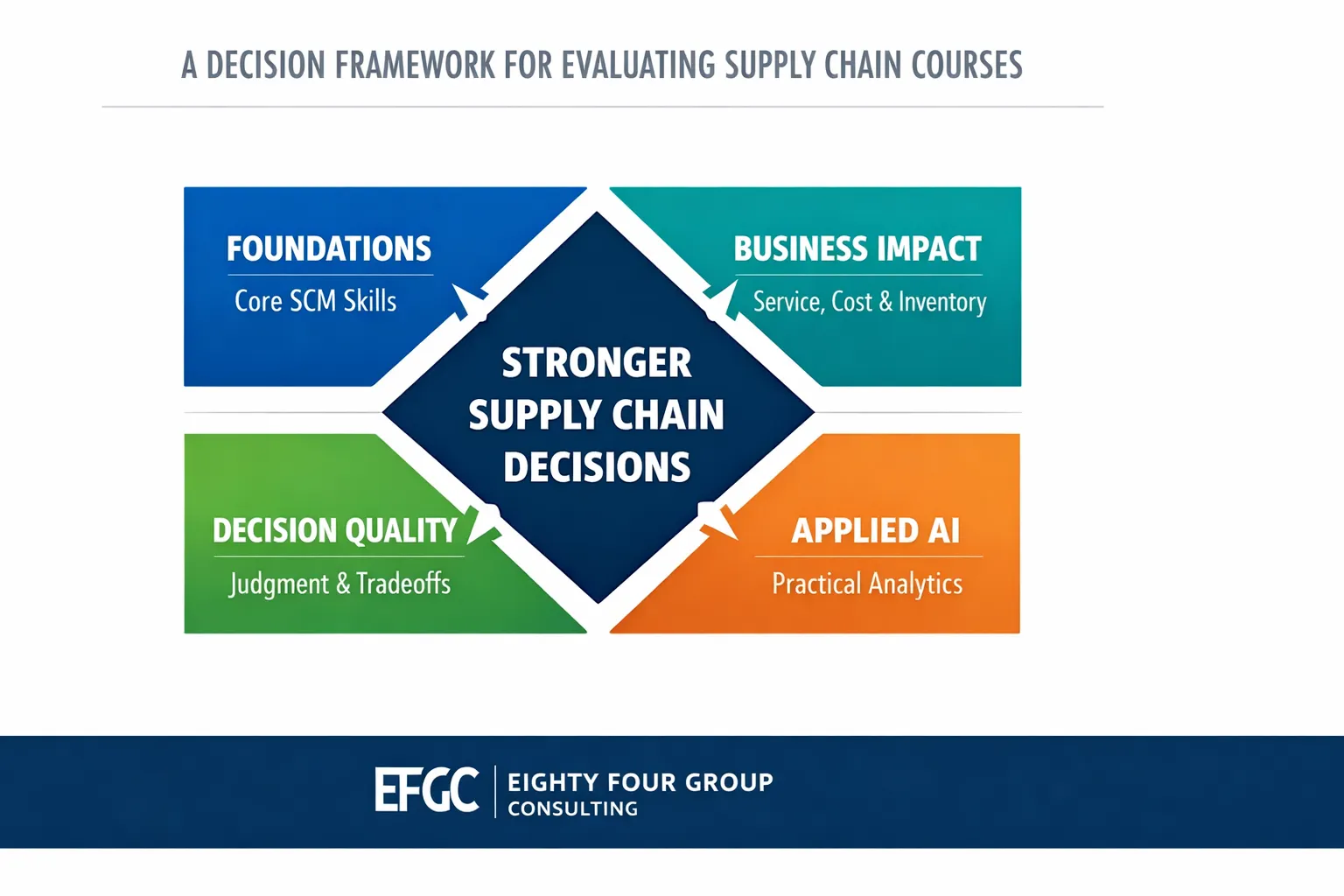
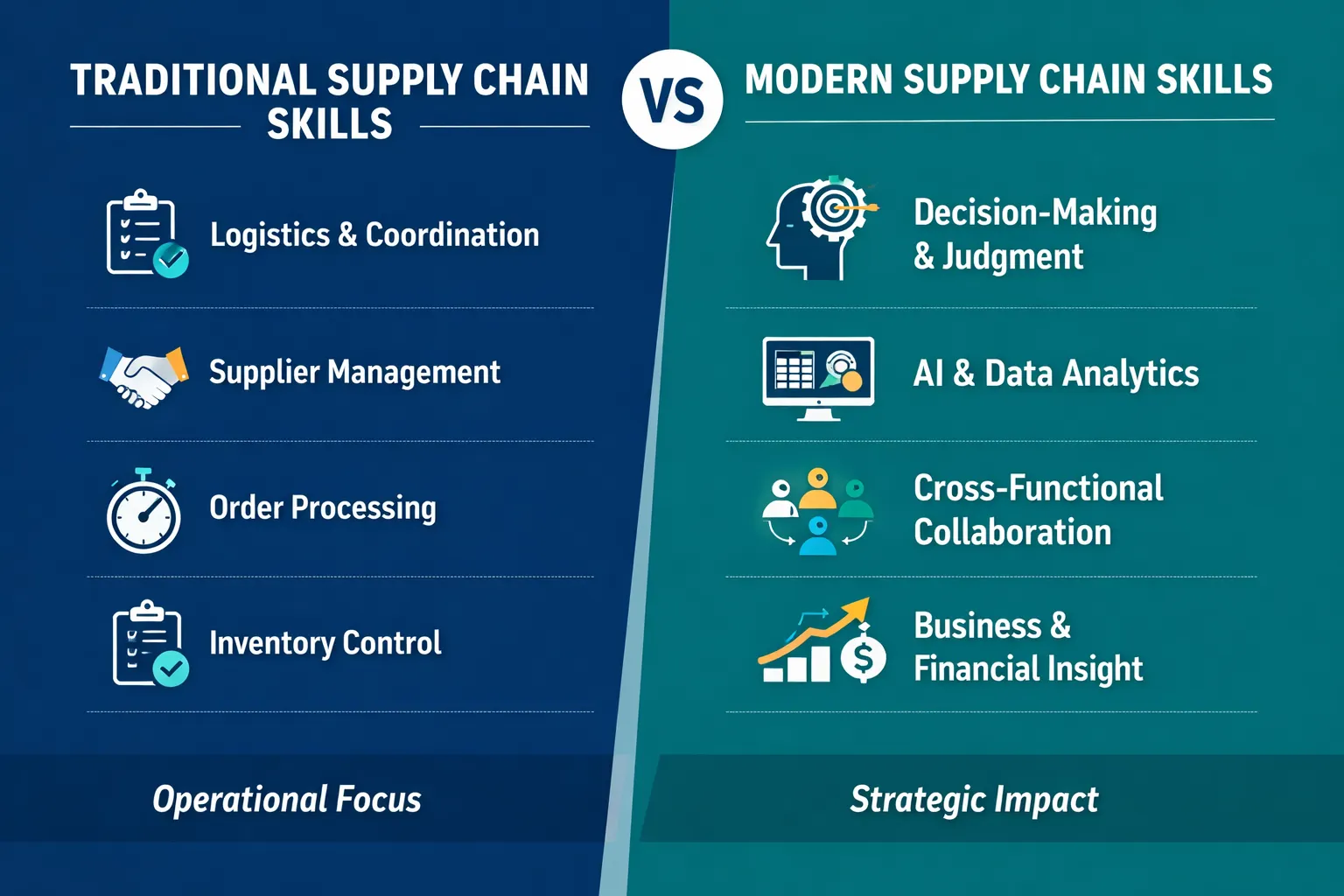
Many supply chain programs still emphasize fundamentals, which remain important. But the operating environment has changed. Students entering the workforce increasingly need practical exposure to AI-enabled planning, decision support, scenario analysis, data interpretation, and cross-functional tradeoffs.
The gap is clear:
Enterprises need job-ready capability.
Academic programs often move more slowly.
This creates an opportunity for stronger collaboration between industry and education providers.
Universities and colleges can improve readiness by:
- embedding AI for supply chain management into SCM courses
- using simulations and business games
- introducing decision-support tools
- teaching students how to evaluate recommendations
- connecting planning decisions to finance and business impact
- using real-world case examples
- building cross-functional project work into the curriculum
The goal is not to turn every student into a data scientist.
The goal is to prepare future supply chain professionals to work in AI-enabled decision environments.
What Effective AI Training Looks Like
Strong AI training is practical, structured, and tied to adoption.
1. It starts with business decisions
Training should begin with the decisions the organization wants to improve.
Examples include:
- how much inventory to hold
- where inventory should sit
- which orders to prioritize
- when to expedite
- how to respond to demand shifts
- how to rebalance supply
- when to override a forecast
- how to evaluate service, cost, and cash tradeoffs
This keeps the training grounded in business reality.
2. It is built around use cases
Instead of teaching “AI forecasting theory,” train planners on how to use AI-generated demand signals during forecast review.
Instead of teaching “automation concepts,” train operations teams on how to respond to AI-supported labor or fulfillment recommendations.
Instead of teaching executives “AI basics,” train them on investment governance, decision rights, risk, and value tracking.
3. It is delivered in short, focused cycles
Long, abstract training programs often lose momentum.
Better results usually come from shorter training cycles tied to implementation waves, pilots, or specific decision workflows.
This allows teams to learn, apply, review, and improve.
4. It includes reinforcement
AI adoption does not happen in one session.
Teams need follow-up, coaching, office hours, playbooks, workflow guides, and adoption reviews.
This is especially important after go-live, when real behavior either changes or quietly returns to old habits.
5. It includes governance and accountability
Training should clarify who owns decisions, who can override recommendations, how exceptions are handled, and how outcomes are reviewed.
This is where AI becomes part of the operating model instead of an external tool.
Measuring What Matters:
Adoption Over Completion
The real measure of AI training is not whether people attended.
It is whether the organization makes better decisions.
Useful measures include:
- percentage of target users applying AI in daily workflows
- number of decisions supported by AI
- decision cycle time improvement
- forecast review quality
- reduction in manual rework
- override rates and override reasons
- improved inventory turns or buffer health
- reduced expedites
- improved service levels
- working capital improvement
- productivity gains
- user confidence scores
- measurable contribution to business outcomes
These metrics help leaders understand whether AI is changing work or simply adding another system to the landscape.
A Practical Tiered Training Model
A strong AI training strategy should be sequenced.
Step 1: Train leadership first
Start with the board, C-suite, and senior leaders.
Clarify strategy, governance, business outcomes, investment logic, and success measures.
If leadership is unclear, the organization will be unclear.
Step 2: Define the priority decisions
Identify the supply chain decisions where AI support can create the most value.
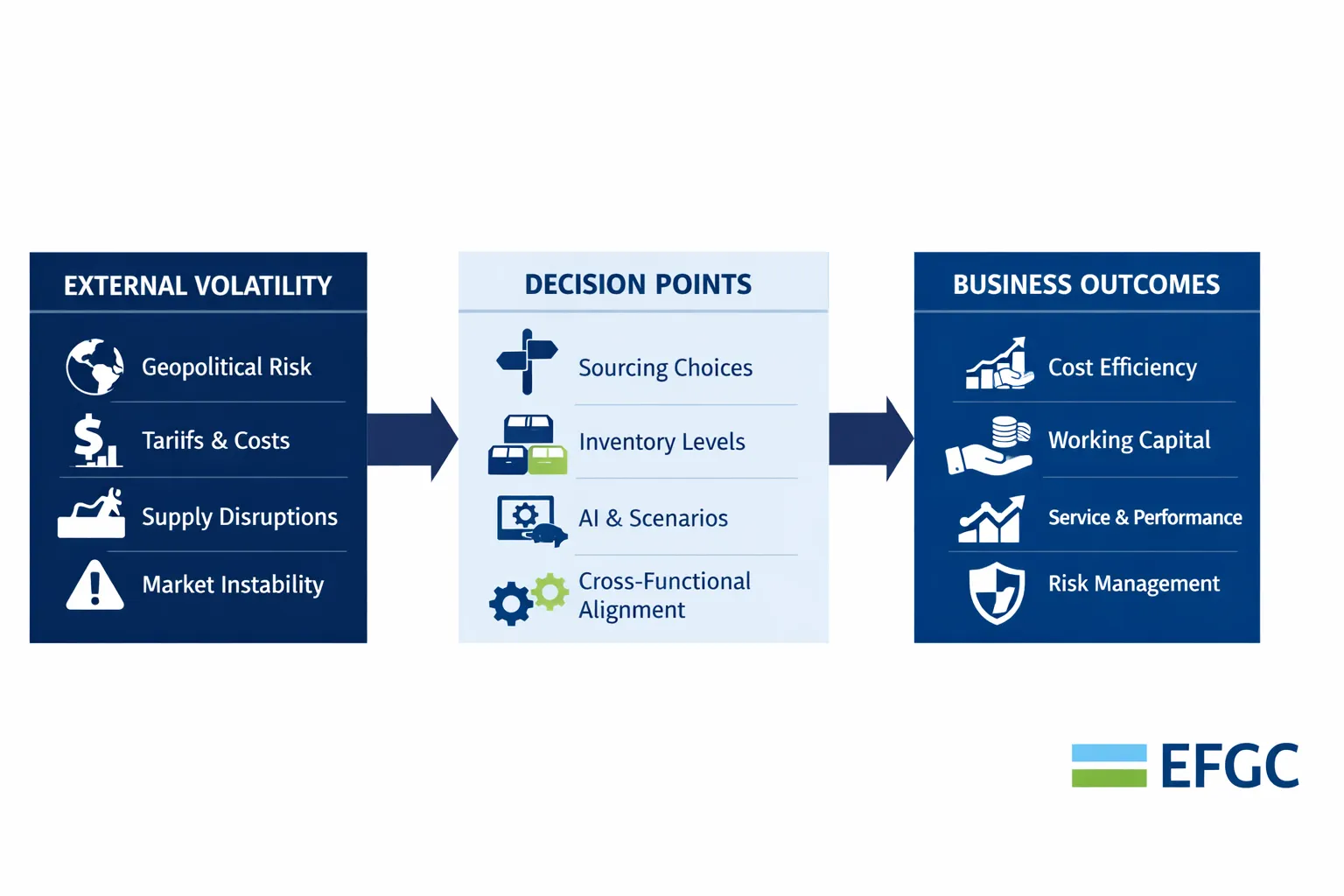
Focus on decisions tied to service, cost, cash, working capital, inventory discipline, and customer impact.
Step 3: Build role-specific training paths
Create separate learning paths for executives, supply chain leaders, planners, analysts, operations teams, finance, and IT.
Each path should reflect the decisions and responsibilities of that group.
Step 4: Train through real use cases
Use scenarios, workshops, simulations, system examples, and actual workflows.
Make the training practical enough that people can apply it immediately.
Step 5: Track adoption and refine
Measure usage, outcomes, confidence, and behavior change.
Adjust the training as the business learns.
AI training should improve over time, just like the workflows it supports.
The Glass Cockpit Connection
The Glass Cockpit approach is built on a practical idea: decision-makers need clear signals, aligned metrics, and the capability to act.
AI can support that environment, but only when people understand how to use it.
A cockpit with better instruments does not help if the pilot cannot interpret the signals.
The same is true in supply chain management.
AI tools may improve visibility, forecasting, scenario planning, and decision support. But business value depends on whether teams can interpret the signals, understand the tradeoffs, and act with discipline.
That is why training is not a support activity.
It is part of the decision system.
Conclusion: Fix the Capability Gap, Then Scale the Technology
AI will continue to reshape supply chain management.
But technology alone will not deliver stronger decisions, better controls, or measurable business impact.
The organizations that gain the most value from AI will be the ones that prepare their people to use it well.
That means moving beyond generic AI awareness.
It means building role-specific capability across executives, leaders, planners, analysts, operators, finance teams, IT teams, and future supply chain professionals.
It means measuring adoption, not attendance.
It means connecting training to real workflows, business outcomes, and operating reality.
AI does not create supply chain value by existing inside a platform.
It creates value when people use it to make clearer, faster, more financially grounded decisions.
The constraint is not only technology.
The constraint is capability.
And for many organizations, that is where the next phase of AI for supply chain management must begin.
FAQ
What is AI training for supply chain teams?
AI training for supply chain teams is practical capability building that helps executives, planners, analysts, operators, finance teams, and technical teams use AI in real supply chain decisions. It focuses on adoption, decision quality, workflow integration, governance, and business impact.
Why do AI adoption efforts fail in supply chain management?
AI adoption often fails because training is too generic, too technical, or disconnected from real workflows. Teams may understand the tool, but not how to apply it to planning, inventory, fulfillment, finance, or execution decisions.
What should supply chain AI training include?
Supply chain AI training should include role-specific learning, practical use cases, workflow integration, decision rights, governance, scenario planning, adoption measurement, and business impact tracking.
Why is role-specific AI training important?
Different roles use AI differently. Executives need strategy and governance. Planners need decision support. Operations teams need execution guidance. Finance teams need value measurement. IT teams need governance and reliability. Generic training does not address these differences.
How should companies measure AI training success?
Companies should measure AI training success by adoption, usage in daily workflows, improved decision speed, reduced rework, better inventory discipline, user confidence, financial impact, and measurable improvements in service, cost, and working capital.
How can universities prepare students for AI-enabled supply chain roles?
Universities can prepare students by embedding practical AI for supply chain management into courses, using simulations and business games, teaching decision support skills, and connecting AI use cases to finance, service, inventory, and operating tradeoffs.
Explore Applied AI for Supply Chain Management Training
Build practical AI capability across supply chain teams, leadership groups, and education programs. Learn how Eighty Four Group Consulting helps organizations connect AI adoption to decision clarity, stronger controls, and business impact.