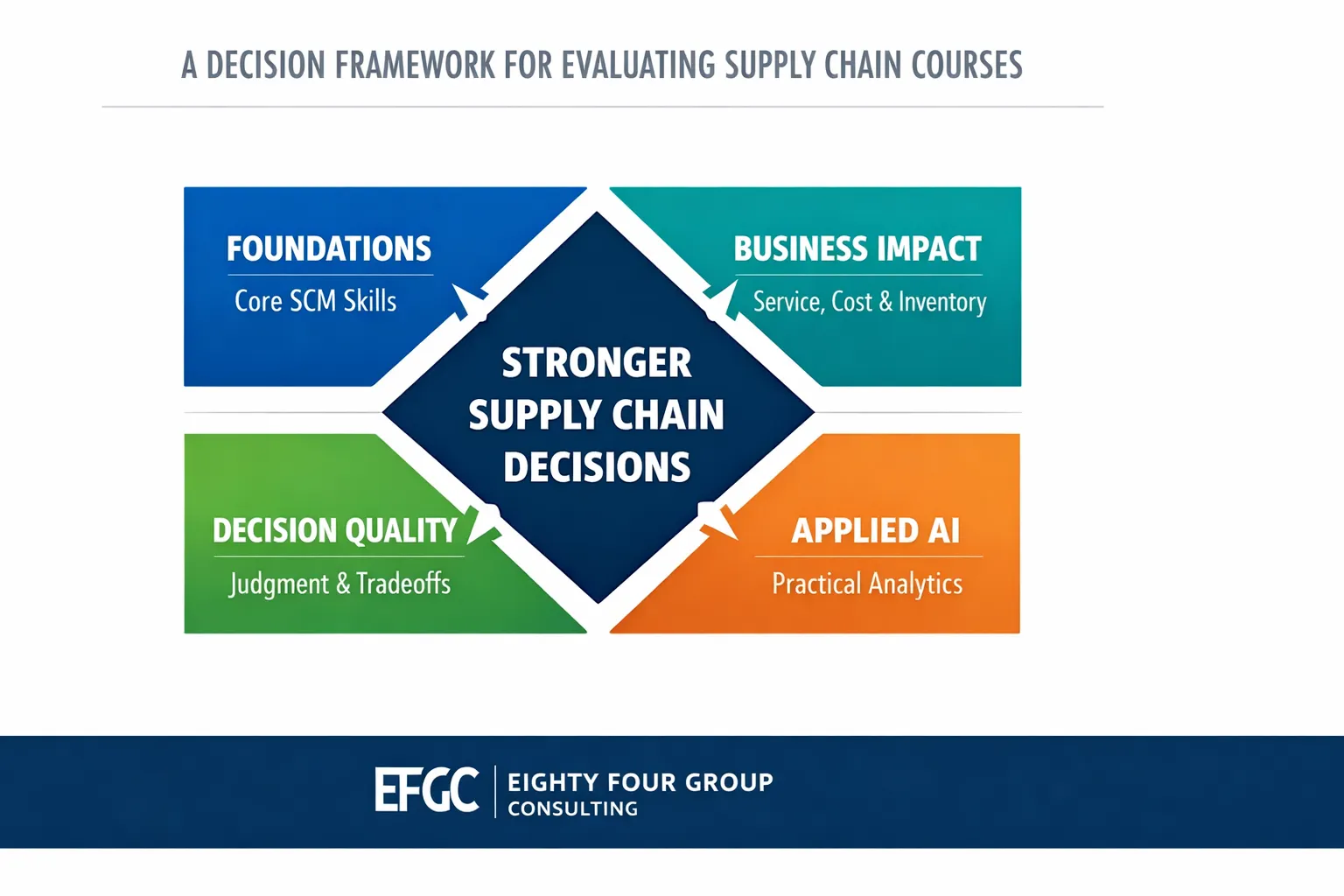
Supply chain management skills that matter in an AI-driven, cross-functional world
Supply chain management skills that matter in an AI-driven, cross-functional world
May 13, 2021
by: Corey Weekes
Supply chain roles now demand more than operational coordination. The strongest professionals combine decision-making, data literacy, AI readiness, cross-functional thinking, and business understanding to improve action, alignment, and career relevance.
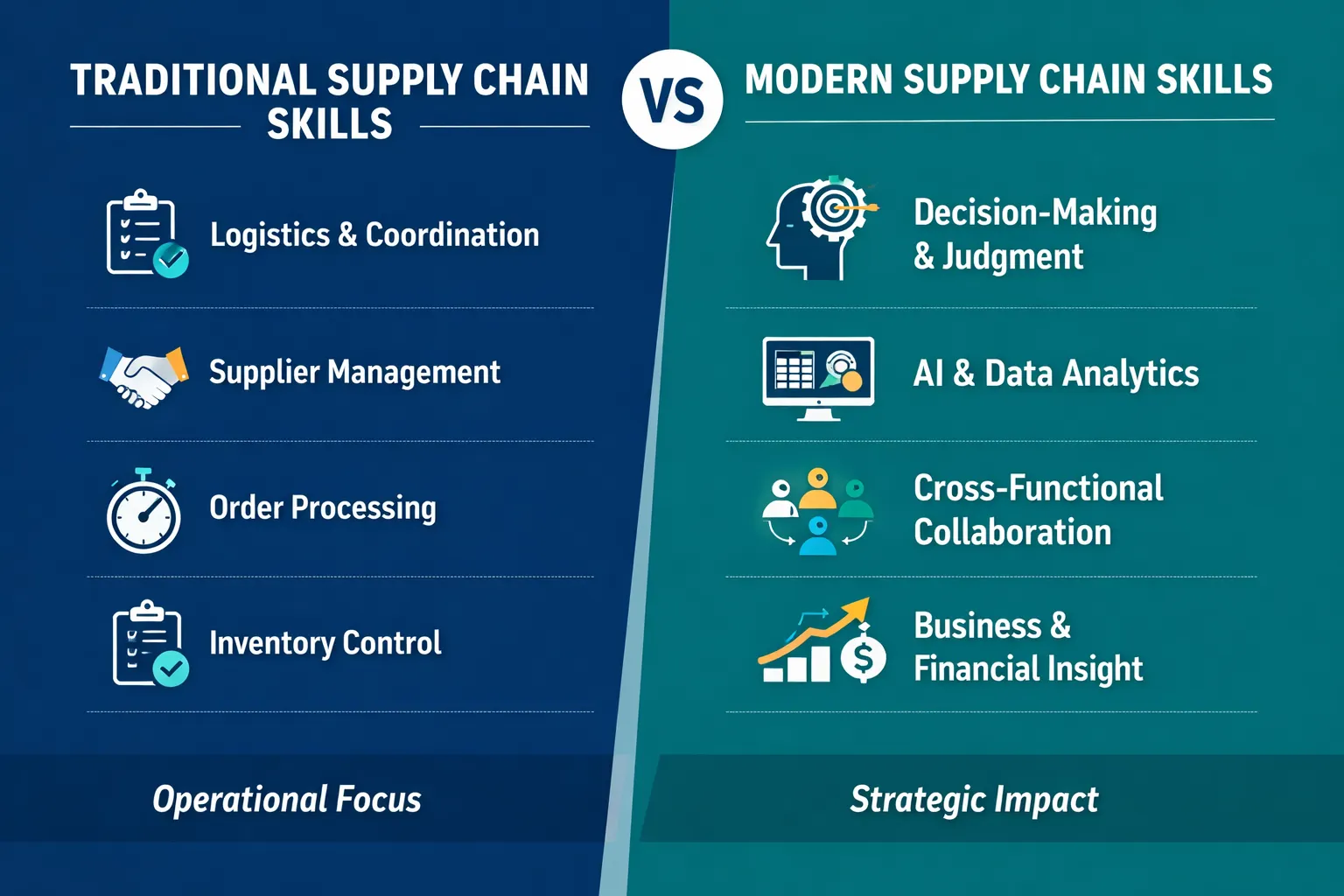
Supply chain management skills are changing.
It is no longer enough to be known as the person who can expedite orders, manage suppliers, or keep operations moving day to day. Those capabilities still matter, but the role has expanded. Modern supply chain work sits much closer to business decision-making than many people realize.
Today’s supply chain professionals are expected to interpret data, work across functions, understand business tradeoffs, and use technology well enough to improve decision speed and quality.
The strongest supply chain management skills now combine operations, judgment, communication, and AI readiness.
That matters whether you are building a career in planning, procurement, logistics, inventory management, operations, or supply chain leadership.
What are supply chain management skills today?
Supply chain management skills are the capabilities that help professionals make better decisions across sourcing, planning, inventory, logistics, fulfillment, supplier coordination, and operational improvement.
In practice, that means much more than being organized or good at logistics.
Strong supply chain professionals know how to:
- understand what is happening operationally
- identify what matters commercially
- work across functions
- interpret data and signals
- respond to risk and change
- communicate tradeoffs clearly
- use digital and AI-enabled tools without losing business judgment
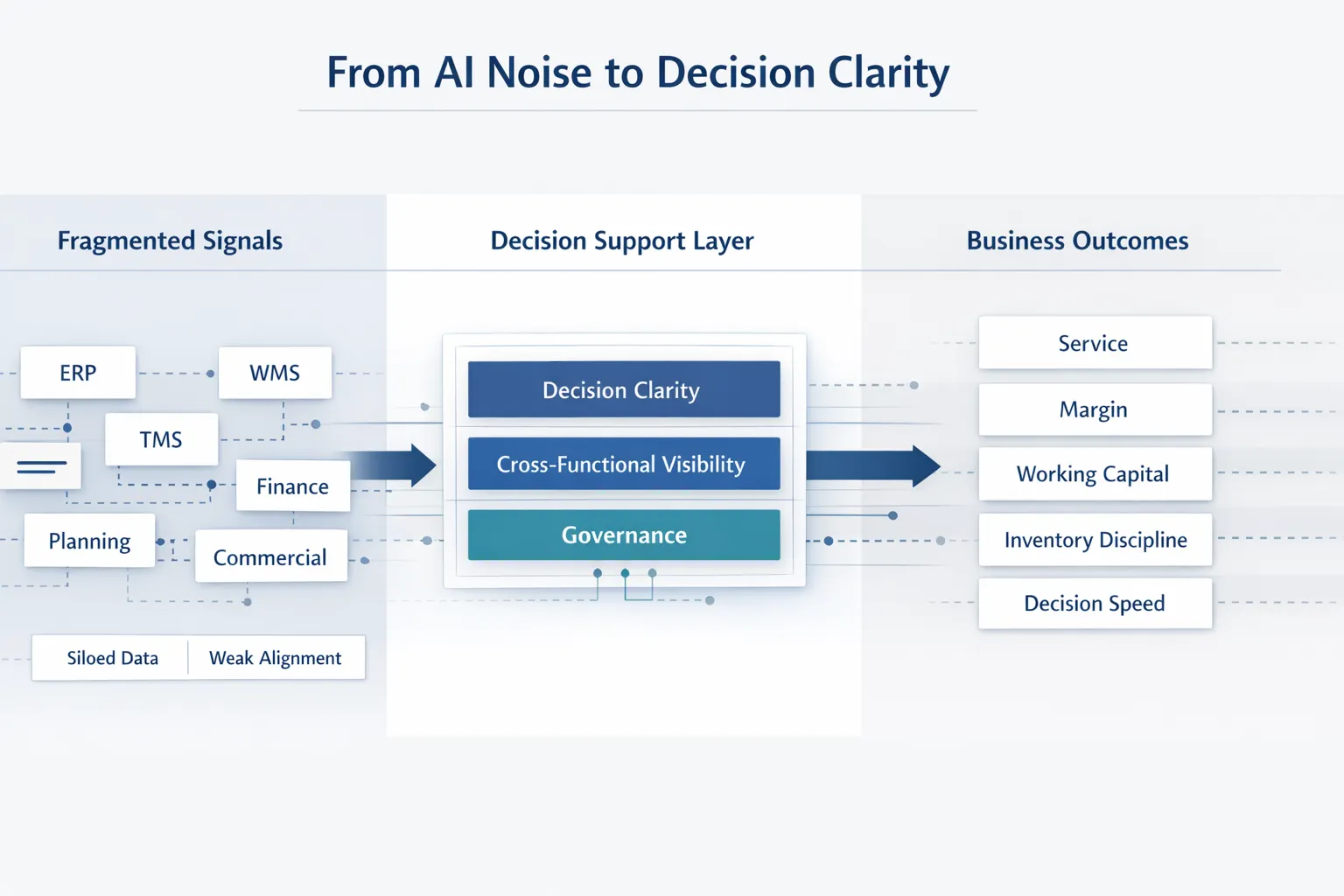
That broader definition matters because supply chain performance is now tied more directly to service, cost, inventory, cash, and business alignment.
Why the definition of supply chain skills is changing
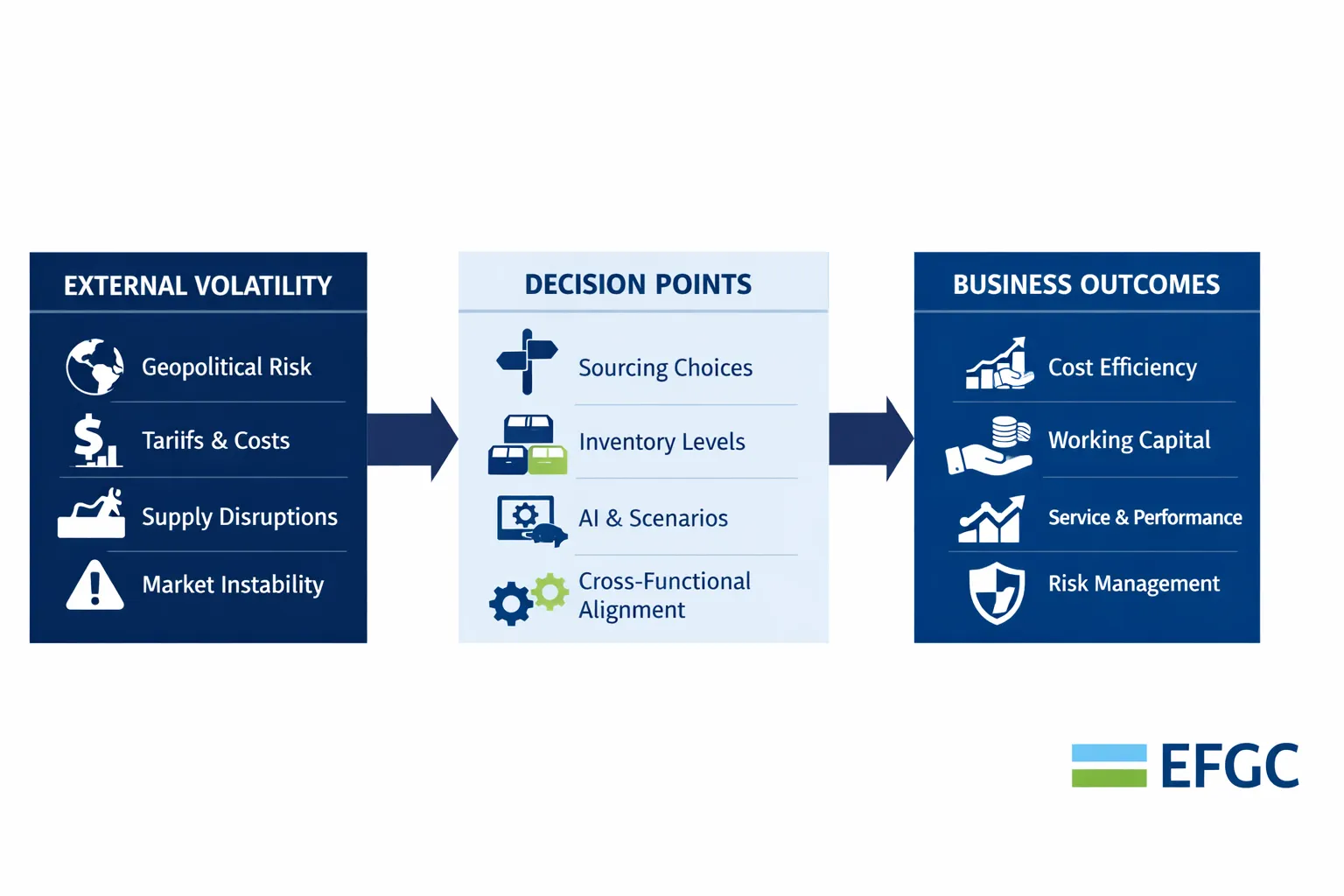
Supply chains have become more volatile, more connected, and more visible to the rest of the business.
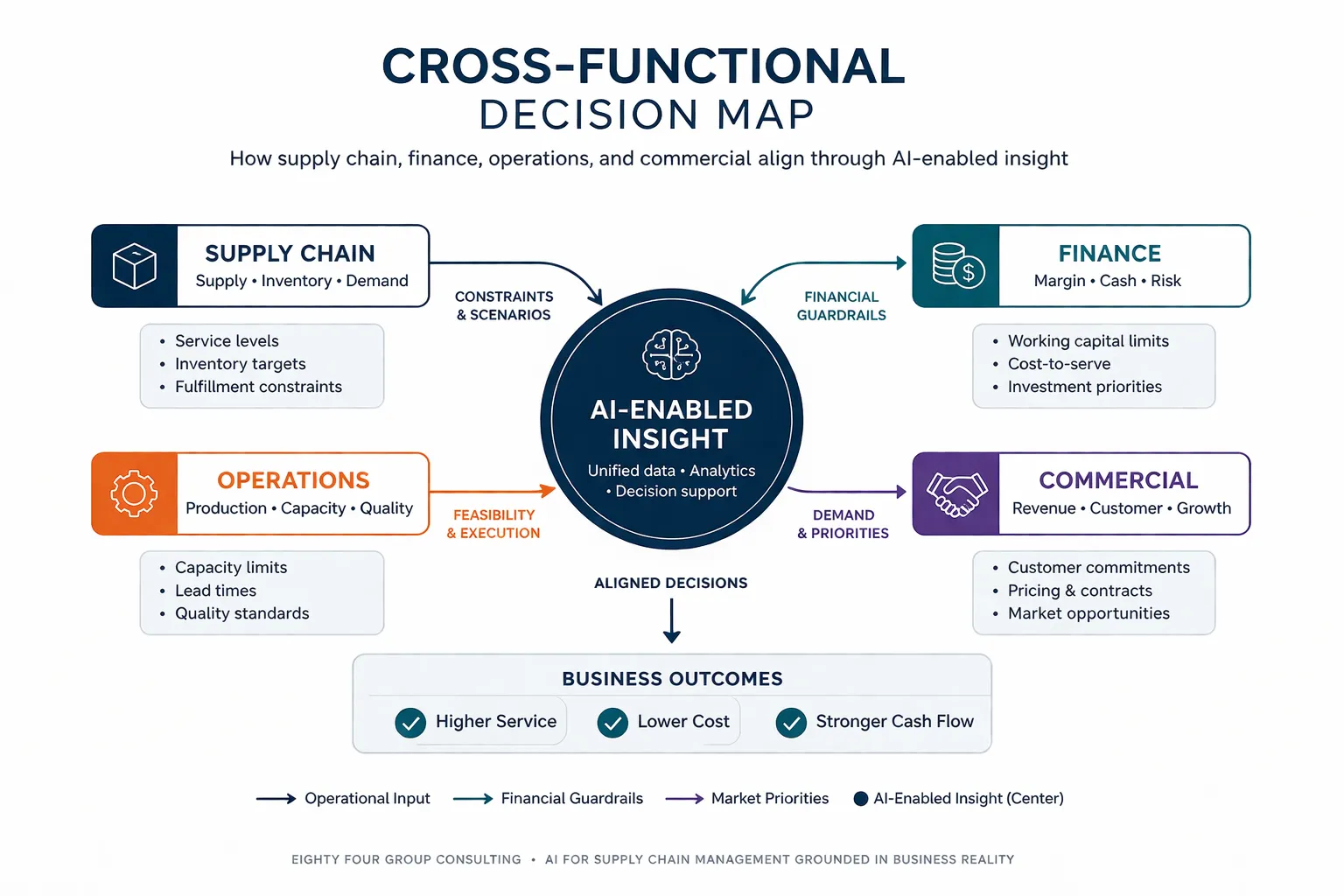
A supply chain decision is rarely just a supply chain decision. It can affect service levels, customer experience, margin, working capital, cash flow, inventory exposure, operating cost, and planning credibility.
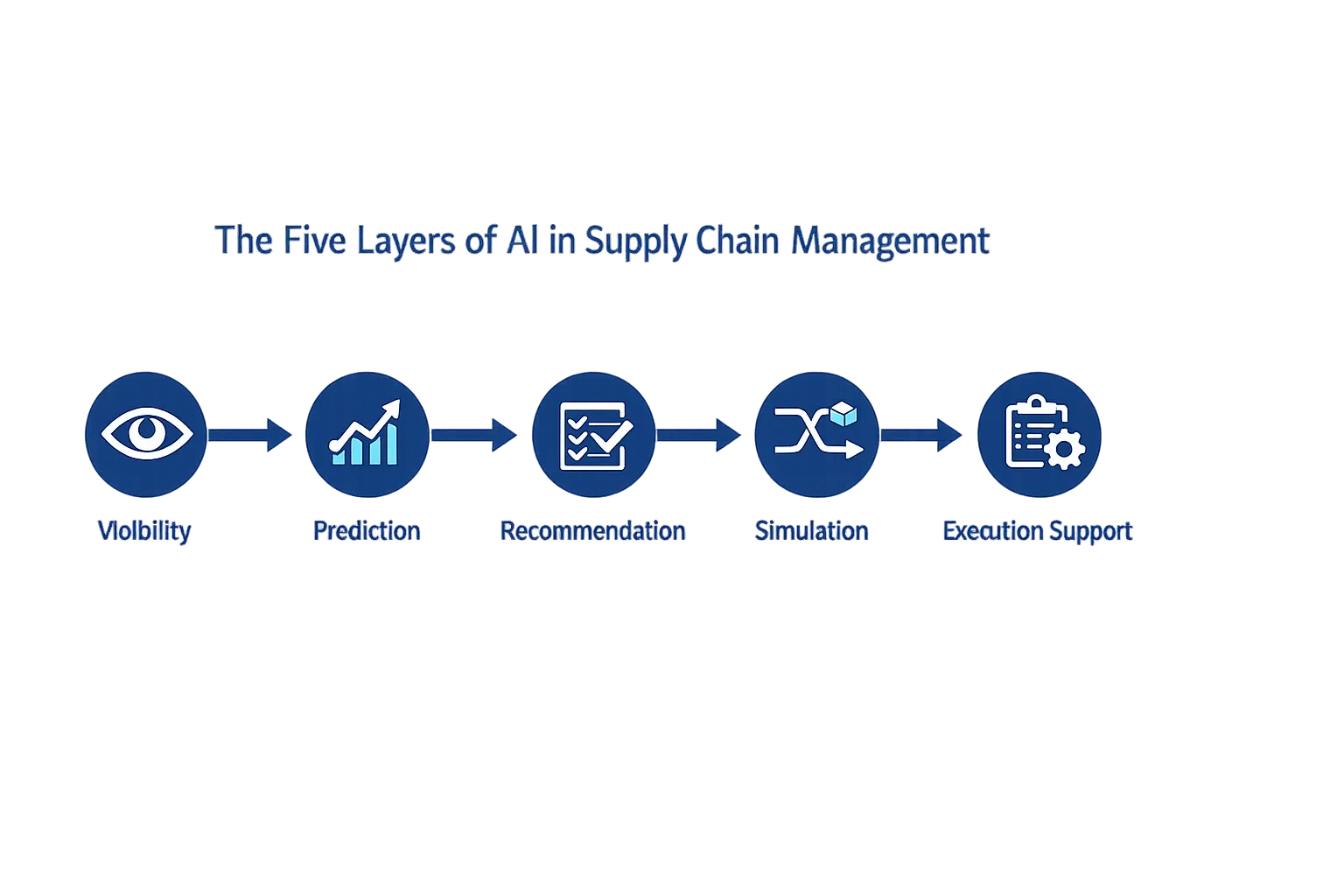
At the same time, teams are being asked to work with more data, more systems, and more pressure to respond quickly. AI and advanced analytics are also starting to reshape how exceptions are identified, how forecasts are interpreted, and how decisions are supported.
That means the most valuable professionals are not just process managers. They are decision support contributors.
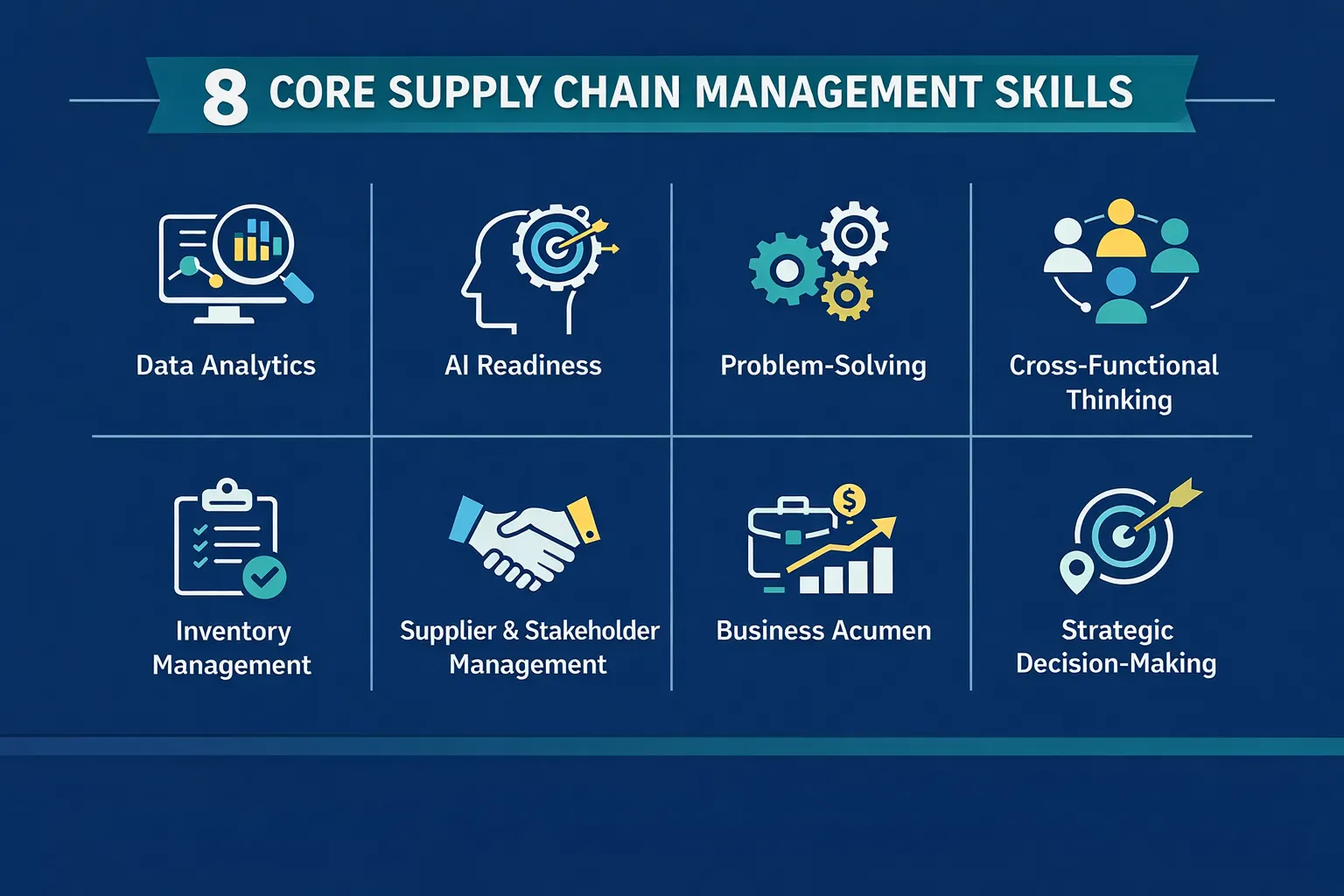
The 8 supply chain management skills that matter most now
1. Decision-making under pressure
One of the most important supply chain management skills is the ability to make sound decisions when conditions are unclear, incomplete, or changing.
In real operations, decisions often need to be made before every data point is perfect. A planner may need to choose between protecting service and protecting inventory. A procurement lead may need to weigh supplier risk against short-term cost. An operations team may need to respond to disruption without creating a downstream problem elsewhere.
Good decision-making in supply chain management means:
- understanding tradeoffs
- knowing what matters most in the moment
- balancing speed with judgment
- choosing actions that support broader business outcomes
This is one of the core disciplines that separates operational activity from stronger supply chain leadership.
2. Data literacy and analytical thinking
Supply chain professionals are surrounded by data, but data alone does not improve performance.
The real skill is being able to interpret patterns, identify what is changing, and turn signals into action.
That includes knowing how to:
- read dashboards and reports
- spot exceptions and anomalies
- compare demand, supply, inventory, and service signals
- ask better questions before acting
- distinguish noise from a real business issue
Supply chain professionals do not need to become data scientists to become more valuable, but they do need to become more confident with data-driven decision support.
3. AI readiness and digital fluency
AI readiness is becoming one of the most important supply chain management skills.
That does not mean every supply chain professional needs to build models or write code.
It means being able to understand:
- where AI can help
- where it cannot
- what a useful AI-supported workflow looks like
- how to question outputs instead of blindly accepting them
- how to connect AI tools to real operational decisions
In supply chain settings, AI and digital tools can help surface risks faster, improve forecasting support, prioritize exceptions, and shorten decision latency.
The career advantage is clear. Professionals who can combine operational knowledge with AI readiness will be better positioned than those who rely only on traditional manual workflows.
4. Cross-functional collaboration
Supply chain work is deeply cross-functional.
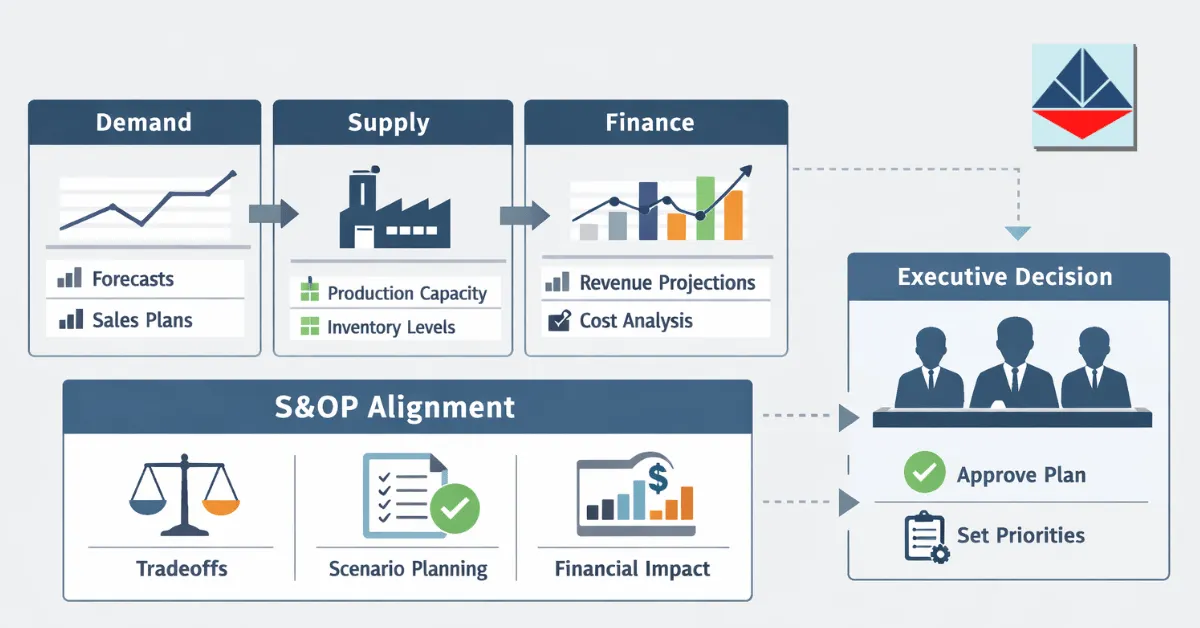
You cannot manage inventory well without understanding finance. You cannot improve service without working with operations, procurement, commercial teams, and suppliers. You cannot strengthen planning quality if teams are protecting their own targets in isolation.
That is why cross-functional collaboration is not just a nice-to-have. It is a core operating skill.
Strong supply chain professionals know how to work across:
- supply chain and finance
- planning and sales
- procurement and operations
- logistics and customer service
- internal teams and external partners
Most major supply chain problems are not caused by a single function acting alone. They happen when teams make disconnected decisions, use different assumptions, or optimize for local performance instead of business performance.
5. Communication and stakeholder translation
A supply chain professional may understand the problem clearly and still fail to create action if they cannot explain it well.
Communication is not just about being clear. It is about translating supply chain issues into language that different stakeholders can use.
That may mean:
- explaining inventory risk to finance
- clarifying service implications for commercial teams
- showing operational constraints to leadership
- helping suppliers understand priorities
- turning analysis into a clear recommendation
The stronger form of this skill is stakeholder translation. That is what helps ideas move.
6. Risk thinking and scenario awareness
Modern supply chain professionals need to think ahead, not just react.
Risk thinking means learning to see exposure before it becomes a problem. It also means understanding that every decision has possible downstream effects.
This skill shows up in areas such as:
- supplier dependency
- lead time instability
- inventory imbalance
- transportation disruption
- demand swings
- service recovery
- margin and cost pressure
The deeper point is this: strong risk thinking improves everyday decisions, not only crisis response.
7. Commercial and financial awareness
One of the most overlooked supply chain management skills is financial awareness.
The stronger skill is understanding how supply chain decisions connect to:
- working capital
- cash flow
- cost-to-serve
- margin pressure
- inventory discipline
- service-related cost
- business performance over time
The best supply chain decisions are not just operationally efficient. They are business-aligned.
8. Continuous learning and career adaptability
Supply chain roles are evolving quickly.
Tools change. Systems change. AI capability changes. The operating environment changes. So do employer expectations.
That means one of the most career-relevant skills is the ability to keep learning.
Professionals who stay valuable tend to do a few things consistently:
- build practical fluency with new tools
- deepen business understanding over time
- improve communication and judgment, not just technical knowledge
- stay curious about how work is changing
- adapt without losing operational discipline
Why AI does not replace supply chain skills
AI is changing supply chain work, but it is not removing the need for strong human capability.
In many cases, it does the opposite.
As more tools can generate analysis, surface patterns, and recommend actions, the value of human judgment becomes even more important. Teams still need people who can challenge assumptions, understand context, manage tradeoffs, communicate clearly, and make decisions that fit business reality.
AI can support faster action.
It cannot replace accountability.
It can improve visibility.
It cannot replace alignment.
It can surface options.
It cannot decide what the business should prioritize.
That is why AI readiness should be seen as a multiplier, not a substitute.
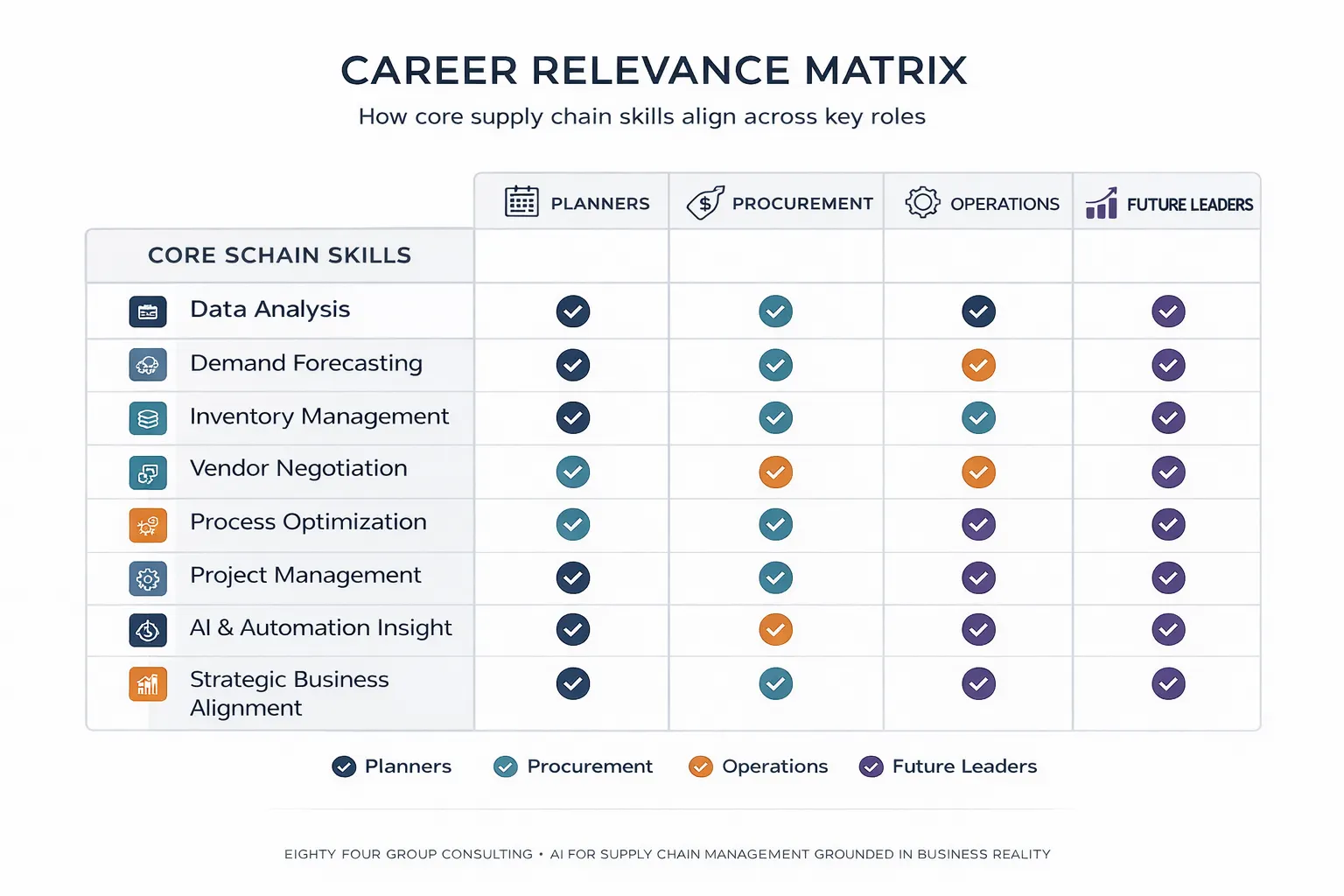
Which skills matter most for different supply chain career paths?
Not every role uses the same mix of skills in the same way.
For planners and analysts
The most important skills are usually:
- data literacy
- structured decision-making
- scenario thinking
- communication
- digital and AI readiness
For procurement and sourcing roles
The emphasis often shifts toward:
- negotiation
- supplier risk thinking
- commercial awareness
- collaboration
- communication
For logistics and operations roles
The strongest skills tend to include:
- execution discipline
- problem-solving
- coordination
- responsiveness
- stakeholder translation
For future supply chain leaders
The most valuable skill mix usually includes:
- cross-functional collaboration
- decision quality
- financial awareness
- digital fluency
- the ability to lead change with credibility
The best professionals are not only good at their own function. They become more valuable as they learn to connect operational decisions to the wider business.
How to build supply chain management skills in practical ways
The best way to build supply chain management skills is not to collect abstract knowledge. It is to practice better decision-making in real or realistic situations.
Build stronger data confidence
Get better at using spreadsheets, dashboards, planning views, and reporting tools. Learn how to read trends, compare signals, and identify meaningful exceptions.
Practice scenario-based thinking
Do not just study best practices. Work through cases where service, cost, inventory, and risk are in tension. That is how judgment develops.
Improve your business language
Learn how supply chain decisions affect margin, working capital, budget pressure, and performance. That helps you contribute more credibly across functions.
Develop AI literacy
Understand the kinds of supply chain problems AI can help with, such as forecasting support, exception prioritization, and faster analysis. Learn how to assess outputs critically rather than treating them as automatic truth.
Work across functions on purpose
If you want to grow, spend more time understanding how finance, operations, commercial teams, and suppliers see the same issue differently.
Keep connecting learning to application
The strongest skill-building happens when people can immediately connect what they learn to real work, real decisions, and real tradeoffs.
What employers and educators should be looking for now
Employers should be looking for more than technical familiarity or narrow function experience.
They should be looking for professionals who can:
- think clearly under pressure
- use data without losing judgment
- work across functions
- communicate tradeoffs
- understand business impact
- adapt to AI-enabled ways of working
Educators and course designers should be doing the same.
It is no longer enough to teach supply chain as a collection of isolated concepts. The stronger approach is to help learners understand how planning, inventory, service, finance, risk, and AI-enabled decision support connect in practice.
That is what makes skills usable.
And that is what makes careers more durable.
Final takeaway
The most important supply chain management skills today are not only technical and not only interpersonal.
They sit in the middle.
They combine decision-making, data literacy, AI readiness, cross-functional thinking, communication, risk awareness, financial understanding, and the ability to keep learning.
That is what makes someone more effective in the role now.
And that is what will keep them relevant as supply chain work continues to change.
Join the Course Waitlist
Practical supply chain learning should do more than explain concepts. It should help people build decision-making ability, AI readiness, cross-functional thinking, and business relevance they can use in the real world.
Join the waitlist to hear when EFGC’s course opens.