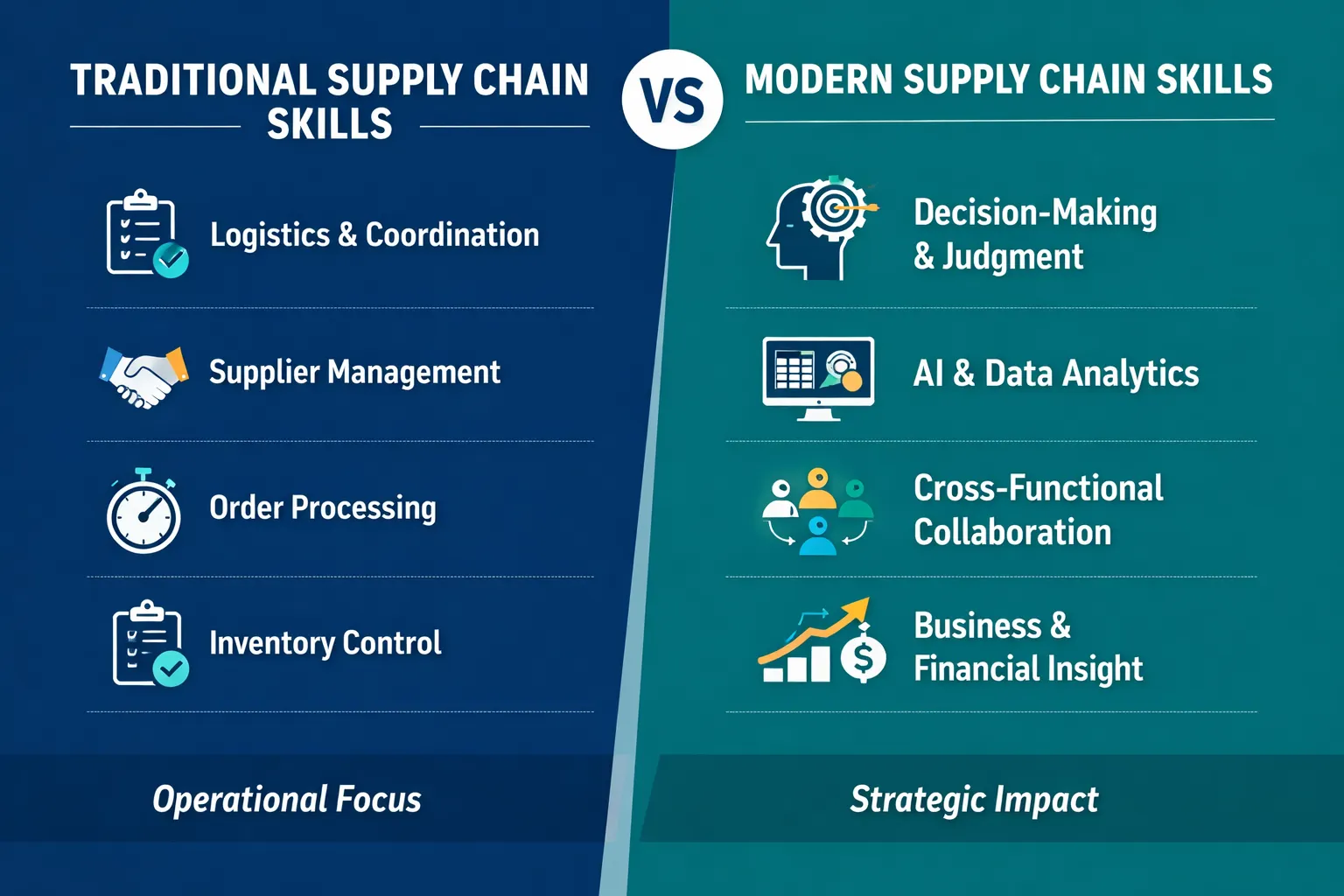
Why Most AI for Supply Chain Fails to Solve the Real Problem
Why Most AI for Supply Chain Fails to Solve the Real Problem
Apr 11, 2026
by: Corey Weekes
AI for supply chain management is getting plenty of attention. New models are faster. Vendors are louder. Dashboards are shinier. Pilot activity is everywhere.
Yet many AI for supply chain projects still under-deliver.
Not because the models are weak. Not because the math is broken. And not because supply chain leaders are somehow behind.
Most fail because they are aimed at the wrong problem.
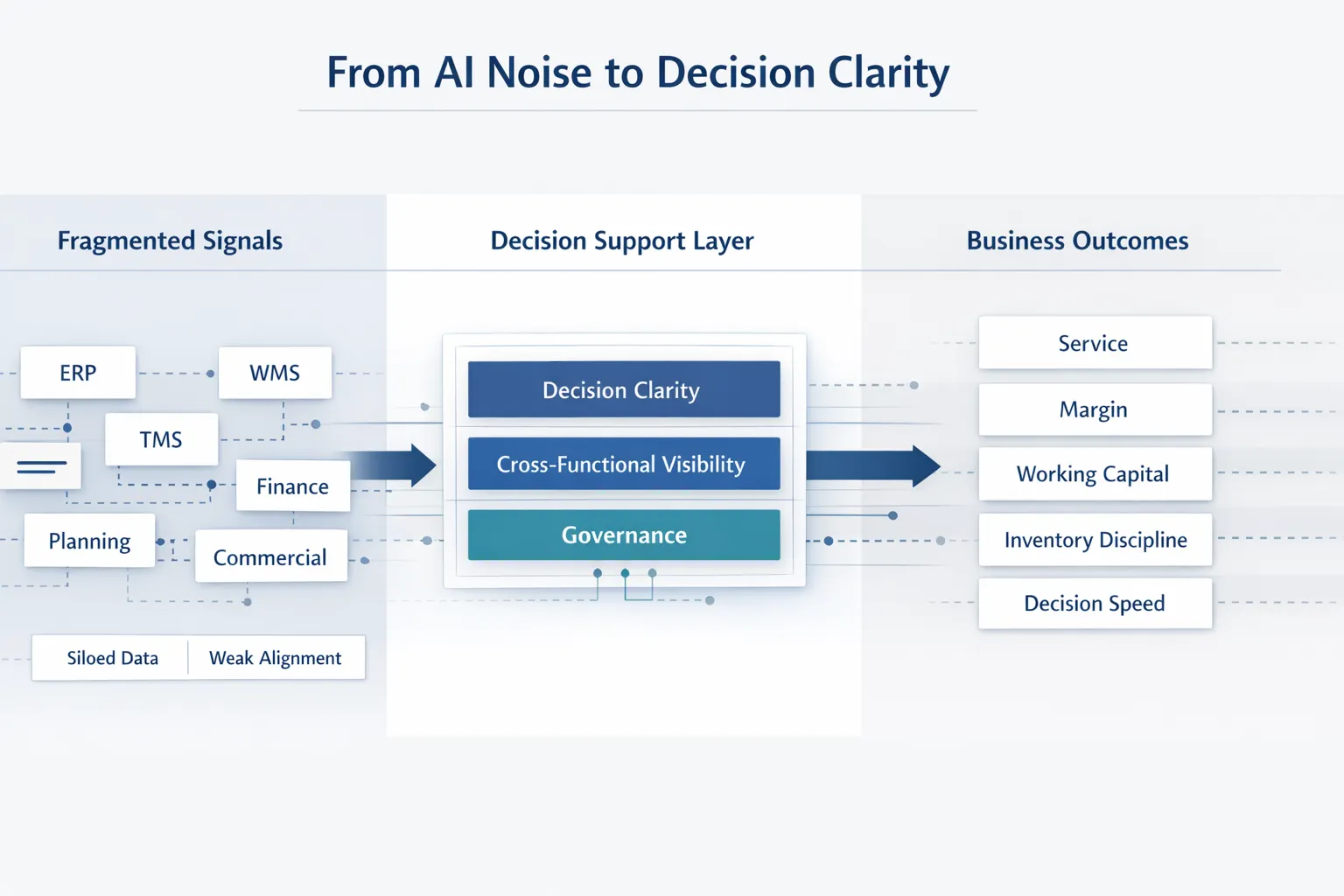
The real issue in many organizations is not a lack of artificial intelligence. It is a lack of decision clarity. It is fragmented visibility. It is weak alignment between supply chain, finance, operations, and commercial teams. It is slow, inconsistent decision-making inside a business that needs faster, more disciplined responses. When those conditions remain unchanged, adding AI usually means automating confusion at a higher speed.
That is the sharper truth behind many supply chain AI problems. The technology may work. The business decision system around it often does not.
The real problem AI should be solving in supply chain
A lot of AI in supply chain discussion still stays at the surface level.
The conversation sounds modern enough. Demand sensing. agentic AI. control towers. digital twins. autonomous planning. intelligent workflows.
But beneath the language, many organizations are still struggling with older, more basic problems. They do not have clear decision rights. They do not have shared definitions of success. They do not have strong cross-functional visibility. They do not have a reliable way to connect service, cost, inventory, working capital, and margin decisions to business priorities.
That is why so many AI deployments look productive without becoming valuable.
A forecasting model may improve signal detection. A planner copilot may summarize exceptions faster. A workflow bot may speed up task completion. None of that matters enough if the organization still cannot answer a more important question: what decision are we trying to improve, under what constraints, and toward what business outcome?
That is where real AI decision support begins.
The market is already hinting at this. Even when “AI” dominates the noise, the deeper interest is often in understanding the system, testing scenarios, and improving decision confidence under pressure. In other words, leaders are not only asking for more intelligence. They are asking for a better model of operating reality.
Why generic AI for supply chain talk misses the point
Generic AI talk usually fails in one of four ways.
First, it talks about capability without talking about decisions. The message is often that AI can forecast, automate, summarize, optimize, or recommend. Fine. But which supply chain decisions improve because of that? Allocation? Replenishment? inventory positioning? expedite versus delay? substitution? service-level tradeoffs? If the answer is vague, the value case is vague too.
Second, it treats AI as a technology layer instead of a business operating choice. That leads organizations to buy software features before they align on strategy, success measures, or decision rules. Then the tool arrives before the organization is ready to use it well.
Third, it assumes that better insights automatically produce better outcomes. They do not. Plenty of organizations already have more reports than they can act on. If the underlying process is broken, or the response capability is weak, faster insight only helps you notice the problem sooner. It does not solve it.
Fourth, it hides the governance question. AI does not stop needing ownership after go-live. Policies change. product mixes change. network conditions change. Customer priorities change. If no one owns the updating, monitoring, and business alignment of the system, the model drifts and the confidence fades.
This is why so much supply chain transformation language sounds impressive and still fails to improve business performance. It is aimed at the tool conversation, not the decision system conversation.
Four reasons AI for supply chain projects under-deliver
1. No clear business-aligned decision target
Most AI projects should start with a business question, not a software demo.
What is the company trying to win on? Cost leadership? service leadership? speed? availability? differentiated customer response? Which supply chain tradeoffs matter most to that strategy? What does success look like in financial and operational terms?
Too many organizations skip this step. They move directly into use cases, platforms, vendor pitches, or pilot planning. Then they wonder why the effort feels busy but not decisive.
If strategy is unclear, AI becomes an expensive way to automate confusion. If strategic targets are not translated into measurable business outcomes such as margin, cash, ROCE, cost-to-serve, service levels, or inventory guardrails, the deployment has no real scoreboard. It can still produce activity, but not disciplined progress.
This is where many AI for SCM initiatives quietly go wrong. The project may be technically valid. It is just not tightly linked to how the business competes.
2. Weak pilot design
A weak pilot is one of the fastest ways to waste time and lose credibility.
Small pilots are not automatically bad. But many are too narrow, too cosmetic, or too detached from live operating decisions. They demonstrate that a model can run, not that the business can improve.
A stronger pilot is different. It touches a real decision with real business implications. It proves whether the organization can improve service, reduce decision latency, protect margin, release working capital, or improve inventory discipline under actual operating conditions. It is also designed for comparison, so the business can see a before-and-after effect against a control baseline.
This matters because internal resistance usually buries low-value pilots. A pilot that does not improve a real supply chain decision or a real business outcome will struggle to survive. A stronger pilot design gives the organization something worth scaling.
3. No dot-connector across the value chain
This is one of the most overlooked reasons AI for supply chain fails to solve the real problem.
A great deal of smart advice already exists. We need fit-for-purpose data. We need scalable pilots. We cannot layer AI onto outdated processes. We cannot work in silos. We need human-in-the-loop governance. All true.
But who actually connects those dots?
Operations is buried in execution. IT is managing architecture, security, and backlog. Finance is closing the month and protecting capital. Commercial teams are chasing growth. The consultant deck may look polished, but decks do not own post-launch drift. The lone AI superhero hire usually gets crushed under the weight of cross-functional inertia.
What is often missing is an embedded senior cross-functional role, the dot-connector, with enough business credibility and operating authority to translate value-chain needs into practical implementation choices.
This role is not a junior note-taker. It is closer to an AI product owner for operations, or a senior business analyst with enough range to do three things well.
First, connect business value to data reality. That means ranking AI opportunities based on what the business actually needs and what the data can actually support.
Second, translate between business needs and technical architecture. That means turning vague ambition into decision workflows, guardrails, escalation logic, and system behavior that can work in live operations.
Third, own the post-launch truth. That means governance, exceptions, accuracy, policy updates, retraining triggers, and continuous improvement.
Without that named accountability, many AI efforts remain exactly what they looked like at kickoff: a collection of ideas, pilots, and PowerPoints.
4. Weak governance after go-live
Many organizations still behave as if AI deployment ends at launch.
It does not.
Agents drift. Rules go stale. Assumptions break. customer priorities change. Suppliers miss. SKU mixes evolve. Promotion calendars shift. Tariff structures move. A recommendation engine that was useful six months ago can become quietly misaligned if no one owns the operating logic behind it.
This is where governance becomes real, not ceremonial.
Good AI governance in supply chain is not only about data privacy or technical oversight. It is also about business alignment. Who checks whether the system still reflects current margin priorities, service tiers, inventory policies, or exception rules? Who owns overrides? Who reviews decision auditability? Who decides when the model should be updated because the network or commercial strategy changed?
If those questions are unanswered, the initiative may still run, but it will not remain reliable enough to support high-value decisions. That is not transformation. That is managed drift.
The AI-powered ERP trap
One of the clearest examples of generic AI thinking is the belief that an AI-powered ERP equals supply chain transformation.
It does not.
Most supply chains do not run on one system. They run across a tapestry of operating systems: ERP, WMS, TMS, APS, PLM, trade systems, and the real-world execution constraints that sit between them. The decision problem lives in that gap between plan and reality. It is the distance between what the system says should happen and what the network can actually do.
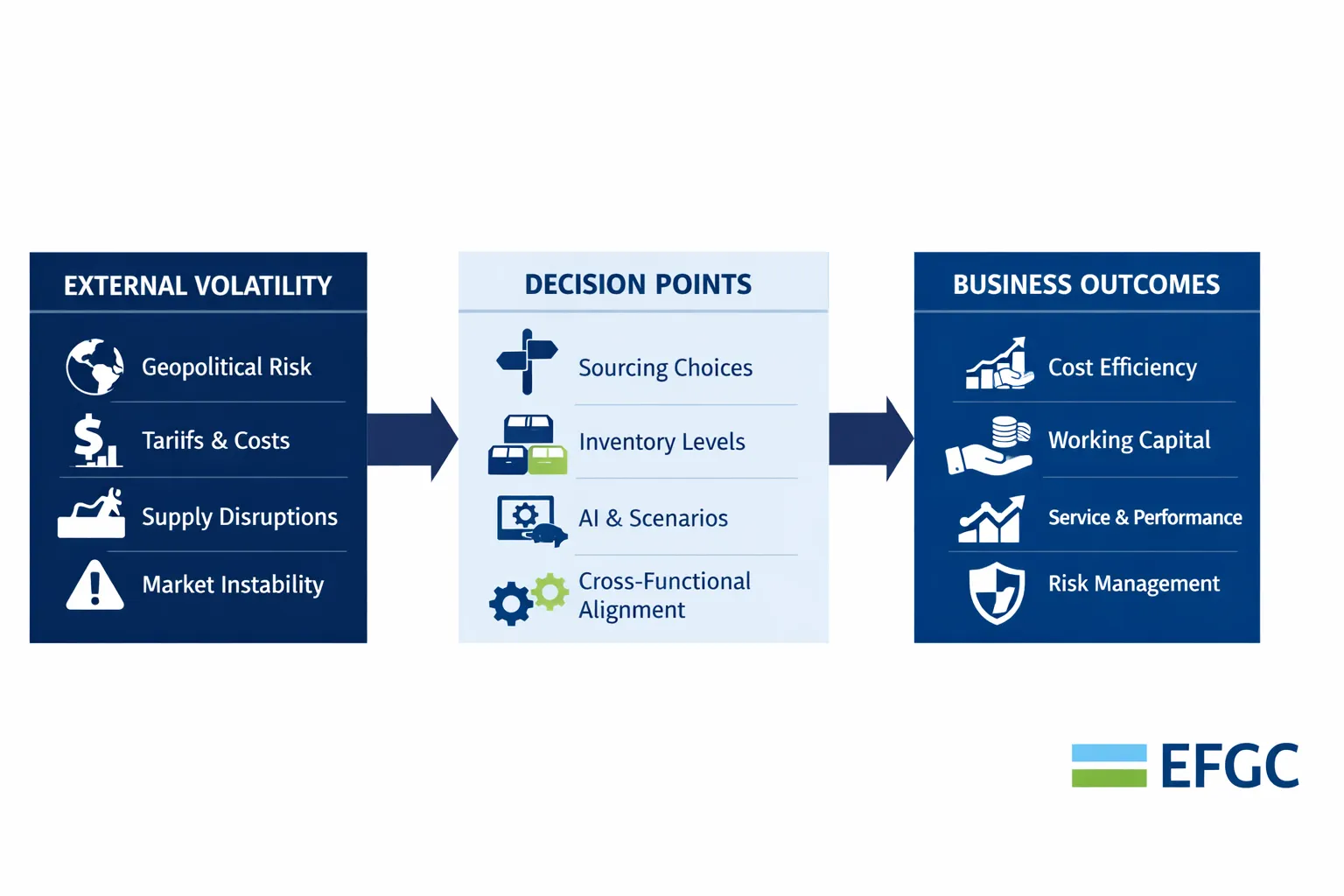
That gap is where businesses bleed. Expedites. stockouts. markdowns. excess inventory. poor OTIF. trapped cash. margin erosion.
So when an organization says it is transforming because its ERP now has AI features, the hard question is whether that feature actually improves cross-system decision support.
Can it build a role-based picture of events across the ecosystem?
Can it identify which exceptions matter most to service, cost, cash, and margin?
Can it recommend actions with clear tradeoffs?
Can it support execution with governance and human judgment where required?
If not, then it may be smarter software, but it is not yet a stronger operating model. As one of the reference documents puts it, the sticker is not the engine. Orchestration is the engine.
What better AI for supply chain management looks like
A stronger approach to AI for supply chain management looks less theatrical and more disciplined.
It starts with business reality.
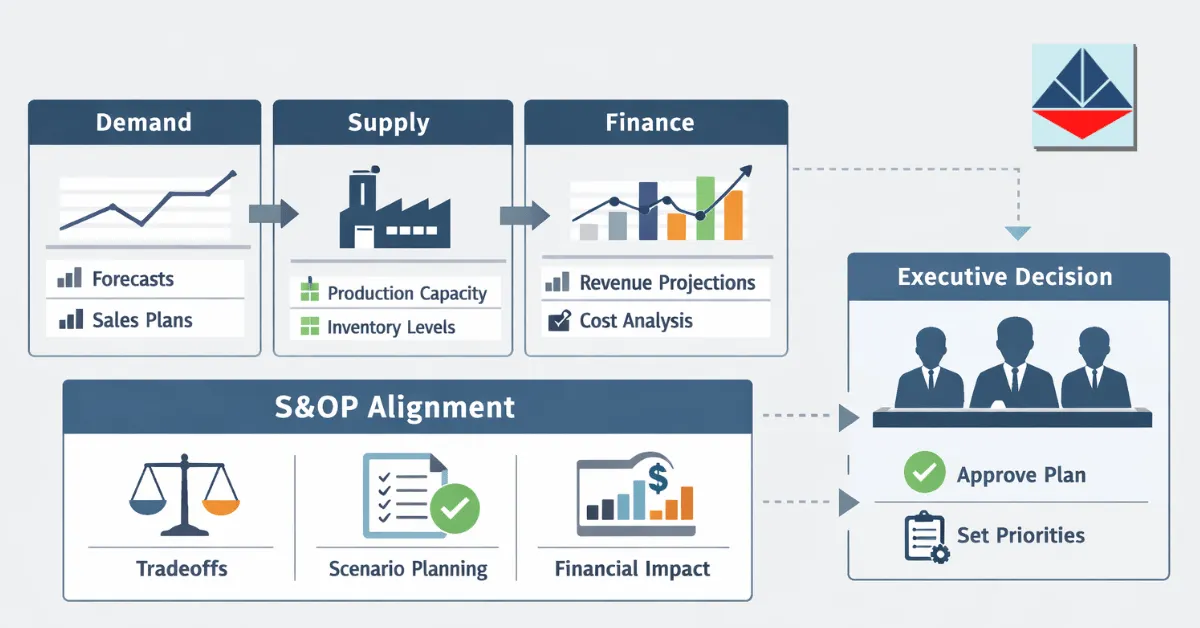
The executive team aligns on what matters most. The organization translates strategy into measurable financial and operational targets. Those targets are linked to value-chain metrics, not functional vanity metrics. Then, and only then, does the AI conversation become useful, because the business knows what decision quality it is trying to improve.
A stronger approach also treats AI as decision support, not dashboard decoration.
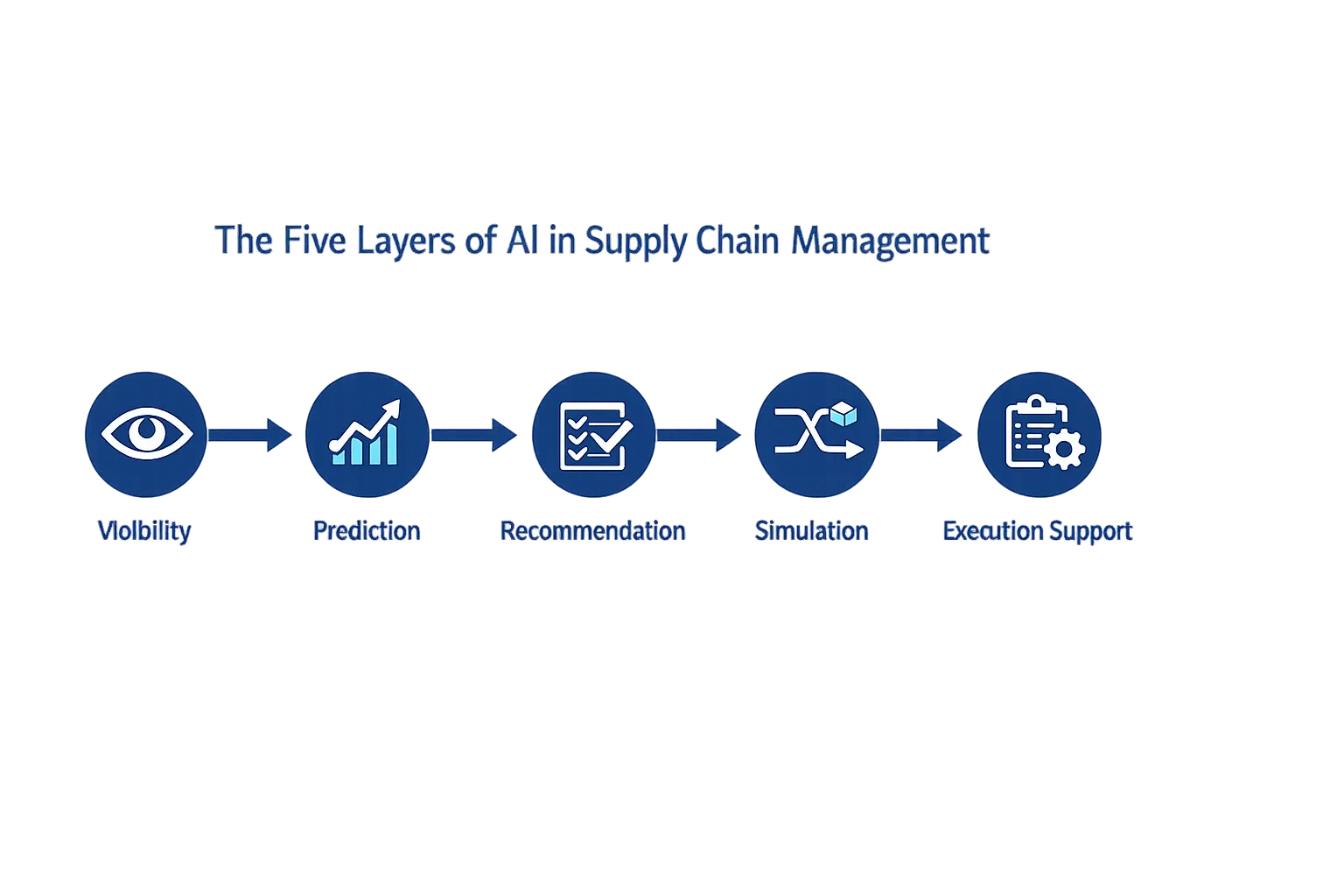
That means focusing on decision workflows where speed and quality matter. It means supporting scenario planning, exception triage, constrained recommendations, and clearer cross-functional visibility. It means tying AI to service, cost, cash, inventory, working capital, and margin outcomes rather than vague productivity claims.
It also accepts that better digital decision support is only part of the job. If the physical network remains rigid, slow, or badly configured, the value created in the decision layer never reaches the customer. Faster intelligence on top of poor flow is still poor performance.
And it puts real ownership in place. The dot-connector role. cross-functional governance. Practical AI literacy. Clear escalation paths. Measurable adoption. Post-launch stewardship.
That is how AI becomes part of a stronger supply chain decision system instead of another isolated experiment.
What enterprise and finance leaders should ask before approving AI for SCM
The quality of the upfront questions usually predicts the quality of the result.
Before approving an AI initiative, enterprise and finance leaders should ask:
What specific supply chain decision is this meant to improve?
How does that decision connect to service, cost, inventory, cash, margin, or ROCE?
What process changes are required for the recommendation to matter?
Which functions must align for value to be realized?
Who owns the system after launch, including governance, policy updates, and performance drift?
How will we measure business improvement beyond tool adoption?
These are not anti-AI questions. They are pro-value questions.
They separate curiosity from commitment, and software excitement from business-aligned decision support.
The real failure is not technical. It is organizational.
Most AI for supply chain fails to solve the real problem because the real problem is usually not technical.
It is organizational.
It is unclear strategy. weak business alignment. fragmented visibility. poor cross-functional ownership. weak governance. broken decision processes.
underdeveloped talent systems. and too much faith that better tools will somehow produce better decisions by themselves.
That is why so many supply chain AI problems repeat. The tools change. The pattern does not.
The better path is not to chase louder AI claims.
It is to build clearer supply chain decisions, stronger controls, better cross-functional visibility, and more business-aligned decision support grounded in operating reality.
That is where artificial intelligence starts to matter.
And that is where most organizations discover the real problem was never a shortage of AI. It was a shortage of decision clarity.